From Evince
Published 2026-07-29
Most homeowners don’t spend much time thinking about what’s in their tap water, until they notice a chlorine smell, unpleasant taste, or dry skin after showering.
In California, however, there’s another water treatment chemical that’s becoming increasingly common: chloramine. While standard water filters can reduce many contaminants, chloramine is more difficult to remove. That’s where catalytic carbon stands apart.
Understanding the difference between catalytic carbon and standard activated carbon can help you choose a filtration system that’s better suited to your local water supply.
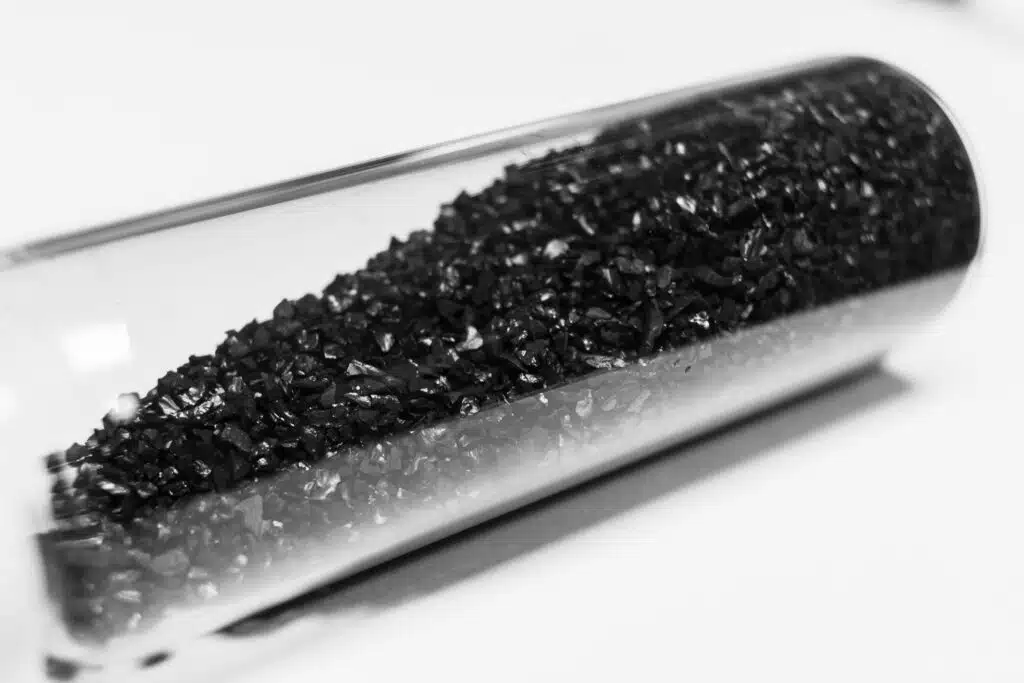
Catalytic carbon is a specially modified form of activated carbon that has been engineered to improve the removal of certain contaminants, particularly chloramine.
Like traditional activated carbon, it has an enormous surface area filled with microscopic pores that trap impurities. However, catalytic carbon undergoes an additional treatment process that enhances its ability to trigger chemical reactions on its surface.
Rather than simply absorbing contaminants, catalytic carbon helps break down chloramine into compounds that are easier to remove during filtration.
This makes it especially effective for municipal water supplies that rely on chloramine instead of chlorine as a disinfectant.
Although both filtration media are made from carbon-rich materials, they perform differently when it comes to disinfectants found in drinking water.
For homes supplied by municipal water, choosing the right filtration media can make a noticeable difference in overall water quality.
Unlike chlorine, chloramine is a more stable disinfectant created by combining chlorine with ammonia.
Its stability allows it to remain in the water distribution system longer, helping maintain water quality as it travels through miles of underground pipelines before reaching homes.
Because chloramine doesn’t break down as easily as chlorine, it also requires more advanced filtration methods to reduce effectively.
According to the U.S. Environmental Protection Agency (EPA), many public water systems use chloramine because it continues disinfecting water over longer distances while producing fewer regulated disinfection byproducts than chlorine alone.
Many water providers throughout California use either chlorine or chloramine as part of the drinking water treatment process.
Depending on where you live, your home’s water may contain one or the other, and in some service areas, treatment methods may change over time.
For homeowners, this can affect:
If your local water utility disinfects with chloramine, selecting a filtration system designed to address it becomes especially important.
California residents can also review their local Consumer Confidence Reports through the California State Water Resources Control Board to learn more about their community’s drinking water quality and treatment methods.

Many communities throughout Riverside County receive treated municipal water that may contain disinfectants such as chlorine or chloramine.
While these disinfectants play an important role in protecting public health, many homeowners choose additional filtration to improve the taste, smell, and overall quality of their household water.
Because water quality can vary by community and supplier, understanding your local water report is the best place to start.
If you’re experiencing noticeable chlorine odors or are researching whole-house filtration, it’s worth considering filtration media specifically designed for modern municipal water supplies.
For more information about common local water challenges, read our guide on Hard Water in Corona, CA: Why It Happens.
A whole-house filtration system treats water before it enters your home’s plumbing.
When catalytic carbon is used as part of the filtration process, every faucet, shower, and appliance benefits from improved water quality.
Potential benefits include:
If you’re comparing filtration options, our guide on Whole House Water Filter vs. Reverse Osmosis explains how whole-house systems and drinking water systems work together.
There isn’t a universal “better” option, it depends on the contaminants you’re trying to reduce.
If your water supply primarily contains chlorine, a standard activated carbon filter may provide excellent performance.
However, if your municipal water uses chloramine, catalytic carbon is generally the more effective choice because it’s specifically designed to improve chloramine reduction.
That’s why many advanced residential filtration systems incorporate catalytic carbon as part of a multi-stage treatment process.
The Water Quality Association (WQA) also recognizes activated carbon technologies as an effective component of residential water treatment when properly selected for the contaminants present in the water supply.
If you’re unsure whether your home receives chlorine or chloramine-treated water, there are several ways to find out.
You can:
Knowing what’s in your water helps ensure you’re choosing a filtration system that’s designed for your home’s specific needs.
If you’re still deciding which type of filtration is right for your home, our comparison of Water Softener vs. Water Filter vs. Combo System explains how different technologies address different water quality concerns.
Yes. Catalytic carbon is specifically engineered to improve chloramine reduction compared to standard activated carbon.
No. Catalytic carbon is a modified form of activated carbon with enhanced catalytic properties that improve the breakdown of chloramine.
Not necessarily. It depends on your local water supplier and the disinfectant used to treat your drinking water.
No. Catalytic carbon is designed to reduce contaminants like chlorine and chloramine. It does not remove the minerals that cause hard water.
Catalytic carbon represents an important advancement in residential water filtration, particularly for homes supplied with chloramine-treated municipal water.
While standard activated carbon remains highly effective for many applications, catalytic carbon offers additional performance where chloramine reduction is a priority.
For many California homeowners, understanding the difference between these filtration media can make it easier to choose a system that matches local water conditions and long-term household needs.